What Is the Best First Piano for a Beginner?
Parents start their children in piano lessons for all kinds of reasons. A child may show musical interest or talent, or parents may simply want to give them the opportunity to learn, create, and experience the sense of accomplishment that comes with making music.
Adult beginners come to the piano for their own reasons—sometimes returning after many years, and sometimes finally pursuing something they’ve wanted to do for a long time.
In either case, there isn’t one best piano for every beginner. The right choice depends on who will be playing, their motivation and goals, the household, the available budget, and whether this is meant to be a first step or an instrument they hope to keep for many years.
For some, a modest but well-made upright may be the right place to start. For others, an affordable digital piano may make more sense. A beginner who is committed to long-term learning may decide that a higher-quality upright or even a grand piano is the better choice from the beginning.
Whatever the path, a first piano should be musically responsive, reliable, and capable of supporting good technique and continued progress. So rather than looking for a single “best first piano,” it can be more useful to start with what every first instrument should provide.
What should every first piano provide?
A first piano doesn’t need to be the most expensive instrument available. But whether it’s acoustic or digital, it should provide the basic tools a student needs to learn and keep progressing:
- A full 88-key keyboard with a consistent, responsive touch. On a digital piano, look for weighted, touch-sensitive keys that allow the student to begin controlling soft and loud playing. On an acoustic piano, the action should be properly regulated so the keys respond evenly. If you’re considering a portable keyboard as a starting point, see Are Portable Keyboards Good for Beginner Piano Lessons?
- A stable, musical sound. An acoustic piano should be in tune and capable of being tuned reliably. A digital piano should give the student enough tonal and dynamic response to hear how their touch affects the sound.
- A working sustain pedal. Pedaling becomes an important part of musical expression as a student progresses.
- Consistency across the keyboard. The touch and tone should be predictable from one end of the instrument to the other so the student can focus on learning rather than compensating for the piano.
Those basics give a beginner a better foundation for developing technique, musical control, and confidence at the instrument. Once those basics are covered, the next question is who will actually be sitting at the piano.
Start with the person who will be playing
A first piano should fit the person who will actually be using it. A young child and an adult beginner may both be starting from scratch, but their needs can look very different.
For a child, comfort and playing position matter from the beginning.
An adjustable bench can help place the arms and hands at the right height, and younger students may also need foot support or a pedal extender so they can sit comfortably without reaching or twisting. Good positioning makes it easier to develop healthy technique and use the pedals as they progress.
Adult beginners often come to the piano with different priorities.
Some are exploring a new interest, while others have wanted to play for years and already know they want piano to become a lasting part of their life. In that case, there’s no reason to limit the search to an instrument labeled for beginners.
Some adults may choose a high-quality upright or grand from the start because they want an instrument with a more refined touch and tone that they can enjoy for many years. Others may prefer a more modest acoustic or digital piano. Either approach can make sense, depending on what the player wants from the piano and how they expect to use it.
Adults may also have a clearer idea of the music they want to play, which can help determine how much tonal range, dynamic control, technology, or room for growth they want from the instrument.
The player is only part of the decision, though. The piano also has to work in the home and practice routine around them.
Think about where and when the piano will be played
The right first piano also needs to work in the home where it will actually be used. Think about how much space is available, where the instrument will sit, and when practice is most likely to happen.
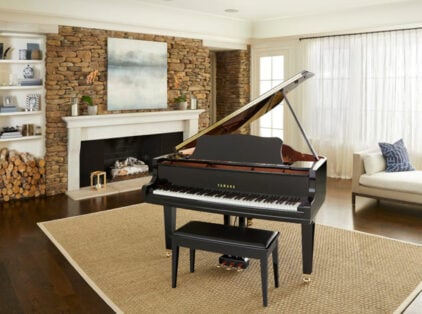
An acoustic piano may be a good fit when space and sound aren’t major concerns.
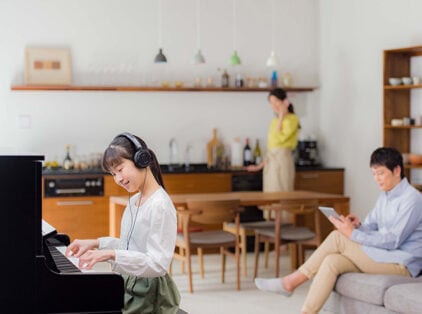
A digital piano can make more sense in an apartment, shared room, or household where early-morning or late-evening practice makes headphones especially useful. An acoustic piano with SILENT technology offers another option for players who want a traditional acoustic instrument with the ability to practice privately.
Digital pianos range from compact portable models to console-style instruments, while acoustic uprights can provide a full acoustic-piano experience without requiring the floor space of a grand.
If you’re deciding between a pre-owned piano and a new one, age can mean different things for acoustic and digital instruments. A well-made acoustic piano that has been properly maintained can remain a useful instrument for many years. With an older digital piano, it’s worth considering the condition of the electronics, whether replacement parts are still available, and how the keyboard action and sound technology compare with newer models.
For a more detailed comparison, see Acoustic, Digital, or Hybrid: Which Type of Piano Is Right for You?
Once you’ve narrowed the options based on space, sound, and practice needs, the next question is how long you want the piano to serve the player.
Choose a piano the beginner can grow into
It’s natural to wonder whether a new student will stick with piano lessons. That can make it tempting to choose the least expensive instrument possible at the beginning.
The goal, though, is to find a piano that fits comfortably within budget while still giving the player enough touch, tone, and responsiveness to keep progressing. There’s a real difference between choosing a modest instrument that supports learning and choosing one the student is simply trying to “get by with.”
When possible, we encourage buyers to think beyond the first few months of lessons. That’s because a well-chosen first piano may support the player for many years before their technique, musical goals, or circumstances call for something different.
For families working within a tighter budget, a teacher or knowledgeable piano retailer may also be able to suggest used instruments, digital options, financing, rentals, or other ways to find a suitable piano without overspending.
What matters is choosing an instrument that supports the player now without unnecessarily limiting where they can go next.
For broader pricing information, see How Much Does a New Piano Cost in 2026?
Common first-piano mistakes we’ve seen
We see a few patterns come up repeatedly when people are choosing a first piano:
- Waiting for a child to “prove” their commitment before providing a suitable instrument. It can be hard for a student to stay motivated when the piano at home is frustrating, inconsistent, or difficult to play.
- Accepting a free or very inexpensive acoustic piano without having it checked first. A “free” piano can still come with significant moving, tuning, repair, and maintenance costs. Our guide to The True Cost of a Free Piano explains what to consider before bringing one home.
- Assuming an adult beginner hasn’t “earned” a better piano yet. We often hear adults say they’re not good enough for a high-quality instrument. No one should spend beyond what feels comfortable, but if the commitment and interest are there, there’s no rule that says a beginner has to start with a piano they already expect to outgrow.
The goal isn’t to buy more piano than you need. It’s to avoid choosing an instrument that makes learning harder or less enjoyable than it needs to be.
Get advice, then compare pianos in person
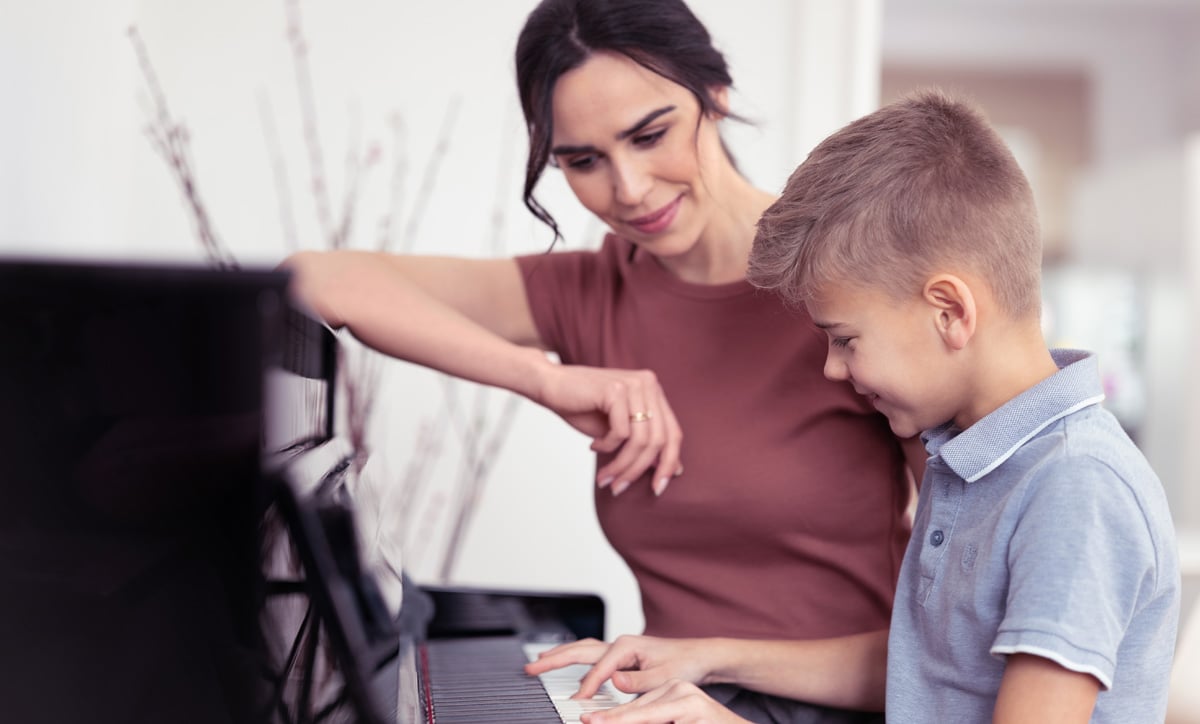
A piano teacher can be a valuable part of the decision, especially for a child or student who is already taking lessons. The teacher knows how the student is progressing, what they’re working on, and where they may be headed next.
That perspective can help narrow the search. A teacher may have useful input on touch, pedal function, keyboard response, or what the student is likely to need as their playing develops.
A knowledgeable piano specialist brings a different kind of expertise. They can explain how current models differ in touch, tone, construction, technology, price, and long-term value, and help connect those differences to the player’s needs and the family’s budget.
Then, whenever possible, try several suitable pianos. You don’t need to become an expert evaluator. Playing a few instruments side by side lets you hear and feel meaningful differences, ask questions as they come up, and notice which piano feels most comfortable and appealing to the person who will actually play it.
If you’re considering a used piano from a private seller, have it inspected by a qualified independent piano technician before buying. Mechanical, structural, or maintenance issues may not be obvious at first glance, and an inspection can help you understand what you’re actually bringing home.
The best first piano is the one that fits the player
By this point, the decision usually comes down to fit.
What matters most is that the instrument provides the touch, tone, reliability, and room for growth the player needs, while still fitting the household’s space and budget.
A good first piano should make it easier to practice, develop technique, and enjoy playing—not become something the beginner has to work around or quickly outgrow.
Compare pianos for beginners at Classic Pianos Portland
At Classic Pianos Portland, you can compare acoustic uprights, digital pianos, pre-owned instruments, and higher-quality pianos that may make sense for beginners with longer-term goals. Our team can help you understand the differences in touch, tone, features, size, and price so you can narrow the choices based on how the piano will be used, your home, and your budget.
If buying isn’t the right step yet, in-home piano rentals may also be worth considering. Classic Pianos offers acoustic upright rentals for first-time players and families who want more time before making a purchase.
Visit our Portland showroom at 1010 SE Powell Blvd., or call 503-239-9969 to compare options and ask questions.
Frequently asked questions
Should I buy a piano before starting piano lessons?
Ideally, the student should have a suitable piano available at home when lessons begin. It doesn’t need to arrive months in advance, but regular practice between lessons is important for reinforcing what the teacher is introducing.
Having the piano in the home beforehand can also give the beginner time to get comfortable with the instrument and may help build some excitement around starting lessons.
Does a beginner need a beginner-level piano?
Not necessarily. “Beginner” describes the player’s current experience, not the level of instrument they have to own.
What matters is that the piano provides a consistent, responsive touch, reliable sound, and working pedal function so the player can develop good technique and musical control. Some beginners may start with a modest instrument, while others may choose a higher-quality piano they expect to keep for many years.
Is an acoustic or digital piano better for a beginner?
Either can be a good choice. An acoustic piano offers the natural touch, tone, and resonance of a traditional instrument, while a quality digital piano can offer weighted keys, headphone practice, a smaller footprint, and a lower starting cost.
The better choice depends on the player, the space, when practice will happen, and how long you expect to keep the instrument.
How much should I spend on a first piano?
There isn’t one amount that makes sense for every beginner. The goal is to stay within a comfortable budget while choosing an instrument that supports learning now and gives the player enough room to keep progressing.
A lower-priced piano can be a perfectly appropriate first instrument if it meets those basics. Spending more may make sense when the player wants a more refined touch and tone or an instrument they expect to keep long term.
Who can help me evaluate a first piano?
A piano teacher can offer perspective on the student’s needs and progress, while a knowledgeable piano specialist can help you compare current instruments. If you’re considering a used piano from a private seller, have it inspected by an independent piano technician before buying.