Yamaha GCB Baby Grand Piano: Sound, Features & Design
How much musical expression can a five-foot grand piano deliver?
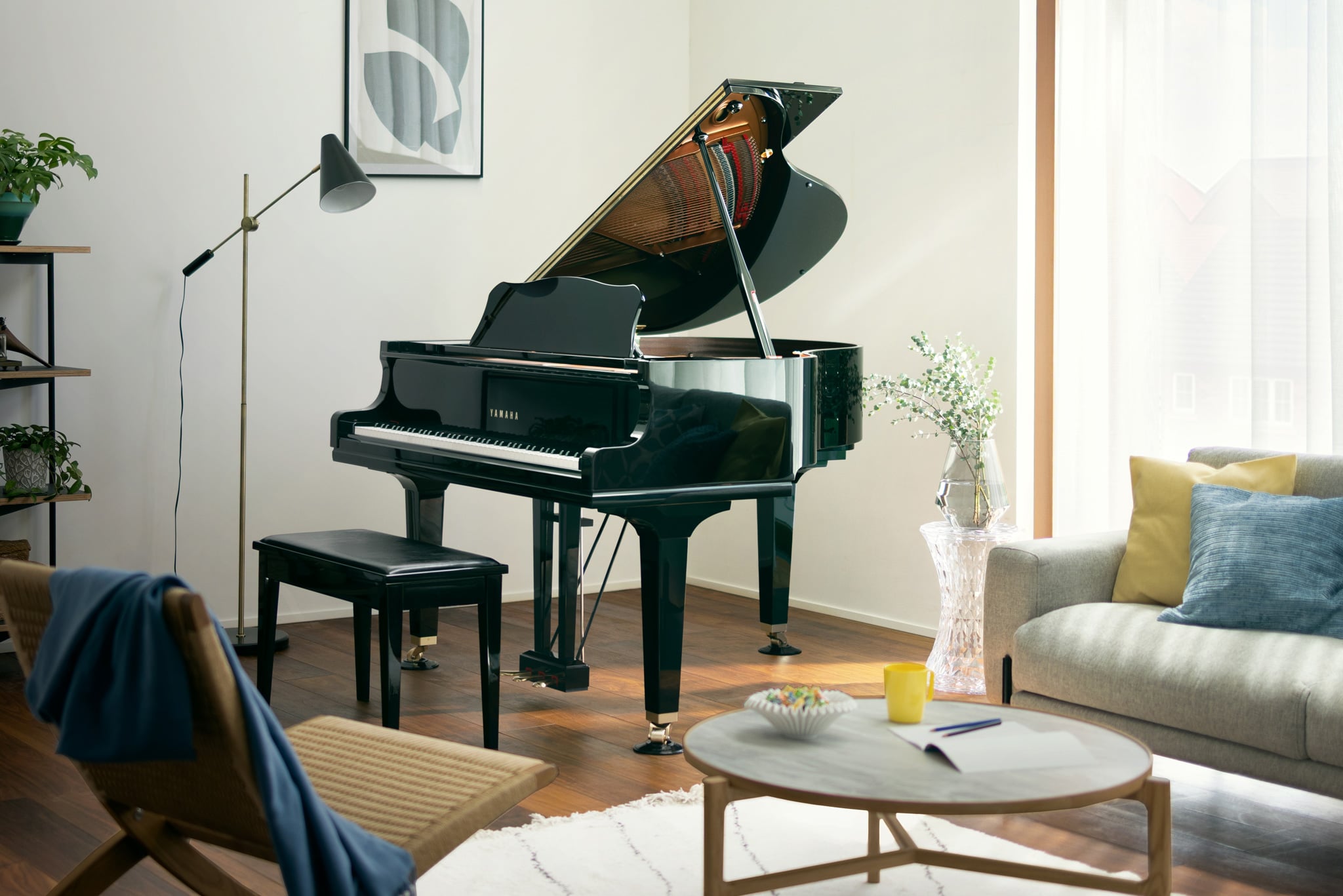
Yamaha’s new GCB baby grand piano offers a compelling answer. Built at the company’s renowned Kakegawa factory in Japan, the GCB brings a surprising level of tonal richness, sustain, and expressive range to an instrument of this size.
Introduced in 2026 as the successor to the popular GB1K, the GCB incorporates innovations and refinements found in Yamaha’s current GC Series, along with the design philosophy of its acclaimed C Series grands.
The result is a compact grand that offers exciting possibilities for pianists who want the sound and responsiveness of a fine acoustic grand but have limited space.
The sound of the Yamaha GCB
The Yamaha GCB produces a rich, beautiful sound that may surprise pianists who have found smaller grand pianos less than satisfying. While staying true to Yamaha’s grand piano design philosophy, the GCB delivers a depth and range of tone you might not expect from a piano that’s just five feet long.
Dynamic range — the ability to play both softly and powerfully while maintaining control of the sound — is especially important to experienced pianists. But it’s traditionally been one of the limitations of smaller grand pianos. That’s not necessarily a reflection of quality. It’s simply a challenge that comes with building a piano of this size.
With the GCB, Yamaha has made impressive progress in overcoming those limitations.
You can hear the difference in how the piano responds. Play softly, and the sound stays rich and full. As you play with more energy, the sound opens up, revealing new colors and surprising depth.
Even during powerful passages, when some smaller grands begin to sound thin or harsh, the GCB maintains its full, balanced tone. And when the music returns to quieter passages, that same warmth and richness are still there.
The engineering behind the music
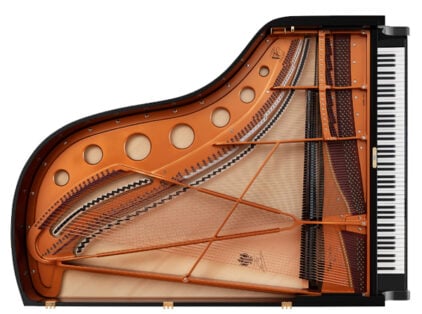
Much of the GCB’s rich sound comes from the way Yamaha has designed its internal components to work together.
The Tone Collector: Helping the piano sing
An important part of the GCB’s design is Yamaha’s Tone Collector. According to Yamaha, the GCB is its first grand piano of this size to include this feature.
Most owners will never see the Tone Collector, but it plays an important role in the piano’s sound. Mounted underneath the piano, it connects key parts of the back structure and helps vibrations travel through the instrument. This contributes to a richer, more sustained tone, allowing notes to ring and musical phrases to develop naturally.
The soundboard and rim: Working together for fuller tone
Both the GCB and its predecessor, the GB1K, benefit from soundboard spruce selected through Yamaha’s renowned Kitami Wood Mill in Japan. But the GCB has a thicker rim, using construction techniques found in Yamaha’s larger GC and CX Series grands.
The solid spruce soundboard and the structure supporting it work together to help the GCB produce a fuller, more sustained sound than you might expect from a piano of this size. Yamaha also takes great care in selecting and preparing the wood, which contributes to both musical performance and long-term stability.
How the GCB's construction supports its sound
Another important part of Yamaha’s piano construction is the care taken in designing and assembling the cast-iron frame and supporting structure.
Why does this matter? The relationship between the strings, bridges, and soundboard affects how well vibrations travel through the piano. Getting these details right helps produce a rich, resonant sound, good sustain, and consistent tone across the keyboard.
This attention to detail is especially valuable in a smaller grand piano, where the instrument’s size naturally places limits on tonal depth and resonance.
The Yamaha GCB's grand piano action: Precision and control
Ask almost any pianist familiar with Yamaha grands, and they’ll tell you that one of Yamaha’s greatest strengths is the precision, responsiveness, and consistency of its grand piano actions. That reputation comes from Yamaha’s careful selection of materials, exacting manufacturing standards, and the skill of the craftspeople who build its pianos.
The new GCB is a great example. Its grand piano action has the precise, responsive feel Yamaha is known for, with a slightly more substantial touch than its predecessor, the GB1K.
Think of the piano as a voice. A professional singer can produce a beautiful sound at full volume, but maintaining that same richness and character when singing softly takes real control.
A fine piano should give the pianist that same freedom to shape the music, from the quietest passages to the most powerful. The GCB does this beautifully, responding to the player’s touch without getting in the way of their expression.
The finishing touches: Regulation and voicing
At Yamaha’s Kakegawa factory, skilled technicians make careful adjustments to each piano before it leaves the factory. This includes action regulation, the process of fine-tuning the piano’s mechanical parts so the keys respond consistently and accurately to the pianist’s touch.
Each GCB also receives careful hammer voicing. Technicians adjust the hammer felt to refine the piano’s sound, helping create a balanced tone and a wider range of musical expression. The GCB’s specially designed hammers are another important part of this process.
Two additional features make the GCB even more versatile:
- Full sostenuto pedal: More commonly found on larger grand pianos, this pedal lets pianists sustain selected notes while playing others normally. It gives advanced players greater control over complex musical passages.
- Adjustable sliding music desk: Pianists can move their sheet music closer or farther away for better visibility and a more comfortable playing experience.
Is the Yamaha GCB baby grand piano right for your home?
The Yamaha GCB is an appealing choice for a wide range of pianists, from beginners to experienced players. It’s especially worth considering if:
- You’d love a grand piano but have limited space. The GCB offers the experience of playing an acoustic grand in a size that works well for smaller homes and music rooms.
- You’re looking for a piano you can grow with. Its responsive touch and expressive range make it a great choice for advancing students and experienced pianists.
Of course, finding the right piano also means finding the right place for it. You’ll want enough room for the bench and comfortable movement around the instrument. Room acoustics matter, too, so it’s worth considering how the piano will sound in different locations.
A little planning can make all the difference in finding the right spot for your new piano.
Modern technology adds even more possibilities
The Yamaha GCB is also available with two of Yamaha’s most popular technologies: SILENT Piano and Disklavier.
Yamaha GCB SILENT Piano: Practice with headphones
SILENT Piano technology lets you practice with headphones while enjoying the touch and feel of the GCB’s acoustic grand piano action. It’s a great option for playing late at night, sharing a home with others, or practicing without disturbing anyone nearby.
Yamaha GCB Disklavier ENSPIRE: Enjoy live piano performances at home
Disklavier ENSPIRE technology transforms the GCB into a sophisticated player piano. It can play music on its own, with the keys and pedals moving as it reproduces performances acoustically. It’s a wonderful way to enjoy live piano music at home, even when no one is sitting at the keyboard.
The ENSPIRE ST version can also record and play back your own performances, while the ENSPIRE CL is designed for playback.
It’s about as close as you can get to having a pianist in the room whenever you want one.
Experience the Yamaha GCB at Classic Pianos in Portland
There’s only so much you can learn about a piano by reading about it. Every pianist is different, and the best way to discover what makes the Yamaha GCB special is to sit down and play it.
Visit Classic Pianos in Portland at 1010 SE Powell Boulevard to experience the GCB for yourself. Our piano specialists can answer your questions, help you compare instruments, and find the right piano for your home and playing needs.
Stop by our showroom, call us at 503-239-9969, or contact our Portland team to learn more.
Frequently asked questions about the Yamaha GCB
How is the Yamaha GCB different from the GB1K?
The GCB replaces Yamaha’s popular GB1K baby grand piano. While both are five feet long, the GCB is built in Japan rather than Indonesia and features several improvements, including a thicker rim, a refined grand piano action, and a full sostenuto pedal. These changes help give the GCB a richer sound, greater sustain, and more expressive playing experience.
How much space does a Yamaha GCB baby grand piano need?
The Yamaha GCB measures five feet long and 58 inches wide. You’ll also want to allow space for the piano bench and enough room to move comfortably around the instrument. Our piano specialists can help you determine the best placement for your home. You can also use our grand piano floor template to help plan your space.
Does the Yamaha GCB come with SILENT Piano or Disklavier technology?
Yes. The Yamaha GCB is available in several versions, including models with SILENT Piano technology for headphone practice and Disklavier ENSPIRE technology for automated acoustic playback. Disklavier ENSPIRE ST can also record and play back your own performances, while ENSPIRE CL is designed for playback.